
Tuesday, 23 June 2026
9:45-10:30 Registration & Coffee
George Moore Building
Café
10:30-11:30 Opening Session
Govan Mbeki Building
Deeprose Lecture Theatre (A005)
Welcome & Opening Remarks
Dr Jim Paterson, Glasgow Caledonian University

Live LLM: An Introduction to Using Comedy in Public Speaking
Susan Morrison is a stand-up comedian with more than 25 years experience on the stages of comedy clubs from Aberdeen to Berlin, with a wealth of knowledge and experience in writing and performing live comedy. As an MC for The Provocateurs (formerly The Cabaret of Dangerous Ideas) and a trainer/MC for The Bright Club in Scotland, she has worked closely with academics to help them ‘find the funny’ in their work or research methods.
11:45-12:45 Parallel Workshops
Govan Mbeki Building
(A303A)

The Storytelling Postgrad
with Kev Anderson, The Case Study Guy
Kev Anderson is a storytelling coach who helps people, teams and organisations find, shape and tell their own stories. His core belief is that in 2026, storytelling is the key professional skill that can help you stand out authentically in a noisy, AI-saturated world.
Whether you’re an established professional or someone just embarking on your career, developing your storytelling skills will help you communicate with purpose and intent. For PhD and postgrad students specifically, it’s about applying story to secure interviews – and to represent yourself in the best possible way when you do.
In this session, Kev will touch on the theme of Computer Science for the Common Good and share some practical tools to help you become a more confident storyteller.
Govan Mbeki Building
(A303B)

Sustainable Computing Beyond Emissions: What Are We Really Sustaining?
with Satwik Ghanta, University of Glasgow
When sustainability in computing is discussed, attention often turns to energy use, carbon emissions, and electronic waste. But could a system be environmentally efficient and still be unsustainable? In this interactive workshop, you’ll work with fellow PhD researchers in a role-playing exercise, acting as sustainability advocates or investigative reporters tasked with scrutinising competing concerns. Together, you’ll explore realistic computing scenarios through multiple sustainability lenses, uncover hidden trade-offs, and examine how technology shapes people, organisations, and futures. No prior sustainability expertise is required, just curiosity and a willingness to question assumptions. Whether your research is in AI, cybersecurity, data science, software engineering, HCI, or beyond, you’ll leave with a fresh perspective, practical framework and new questions that can help strengthen the societal impact of your research.
Govan Mbeki Building
(A427)

Project OpenGenome: Securing Collaborative Research
with Victor Kobani, Glasgow Caledonian University
A high-profile consortium of researchers from three different universities and one private industry partner (a biotech startup) are collaborating on Project OpenGenome. The goal is to train a predictive AI model on a massive dataset of anonymized patient health records to identify genetic diseases.
Working as a team in this table top exercise, your goal is to identify things that could go wrong in this setup. You do not need any cybersecurity background — just think logically about risks, mistakes, or ways someone (inside or outside the project) could cause harm.
Govan Mbeki Building
(A436)
A Funny Way of Thinking (Part 1 of 2)
with Susan Morrison
Comedy and Academia are natural bedfellows. Comedy relies on the element of the unexpected, creating a setup to a surprising punchline. Academia depends on analysis of data to generate a new discovery or outcome.
This 2-part workshop is an introduction to using humour to improve the presentation of your research to both the public and fellow academics. We will explore the writing tools that stand-up comedians use to write their jokes to help you uncover surprising and engaging aspects of your work and we’ll take a look at stagecraft to help you present with confidence, and perhaps even ditch the Powerpoint habit.
There will be tips, games and pointers, and a lot of laughter.
*Participants should plan to attend the second part of the workshop after lunch.
Govan Mbeki Building
(A412)
Postdoc Career Planning
with Gail Ferrier, Glasgow Caledonian University
PhD graduates have a wide range of career options – what’s next for you? This Careers Adviser led session will highlight essential career planning skills to support your job search for academic and non-academic careers.
Gail is a fully qualified Careers Adviser with extensive experience in higher education. Working with undergraduate, postgraduate, PhD students, and recent graduates from all degree disciplines, Gail provides professional one-to-one careers guidance, coaching, and advice in addition to delivering careers and employability workshops as part of the Careers Service’s central programme of careers events.
13:00-14:00 Lunch & Networking
George Moore Building
Restaurant
14:00-15:00 Black Mirror Challenge Part I
Govan Mbeki Building
Deeprose Lecture Theatre (A005)
Session 1: Research for the Common Good
with Jim Paterson, Glasgow Caledonian University
Inspired by the TV series Black Mirror, this activity explores how technologies designed to improve society can also produce unexpected social, ethical, and political consequences once deployed in the real world. The term “black mirror” refers to the dark reflective surface of a screen, symbolising technology reflecting humanity — including its ambitions, biases, and unintended impacts — back at itself.
In this challenge, your group is a research team that has developed a breakthrough computing technology intended to benefit society.
You will present the technology twice, first at The Launch Pitch: The optimistic version presented at the time of release. Then in The Retrospective Story: A critical retrospective set 5 years later examining what actually happened after deployment.
The challenge is to explore the gap between intentions and outcomes, innovation and responsibility, and technical success and societal impact.
In Part 1 of the Challenge, groups will choose their technology or breakthrough and draft their Launch Pitch in the form of a University press release.
In Part 2 (on Wednesday) groups will create their Retrospective.
Particularly compelling submissions will be considered for prizes at the Conference Dinner.
Govan Mbeki Building
(A436)
A Funny Way of Thinking (Part 2 of 2)
with Susan Morrison
Workshop participants will reconvene after lunch.
*Participants must attend the first part of the workshop before lunch.
15:15-16:30 Coffee & Poster Session
George Moore Building
Restaurant
16:30-17:30 Social Activities
Assemble in front of the ARC at GCU
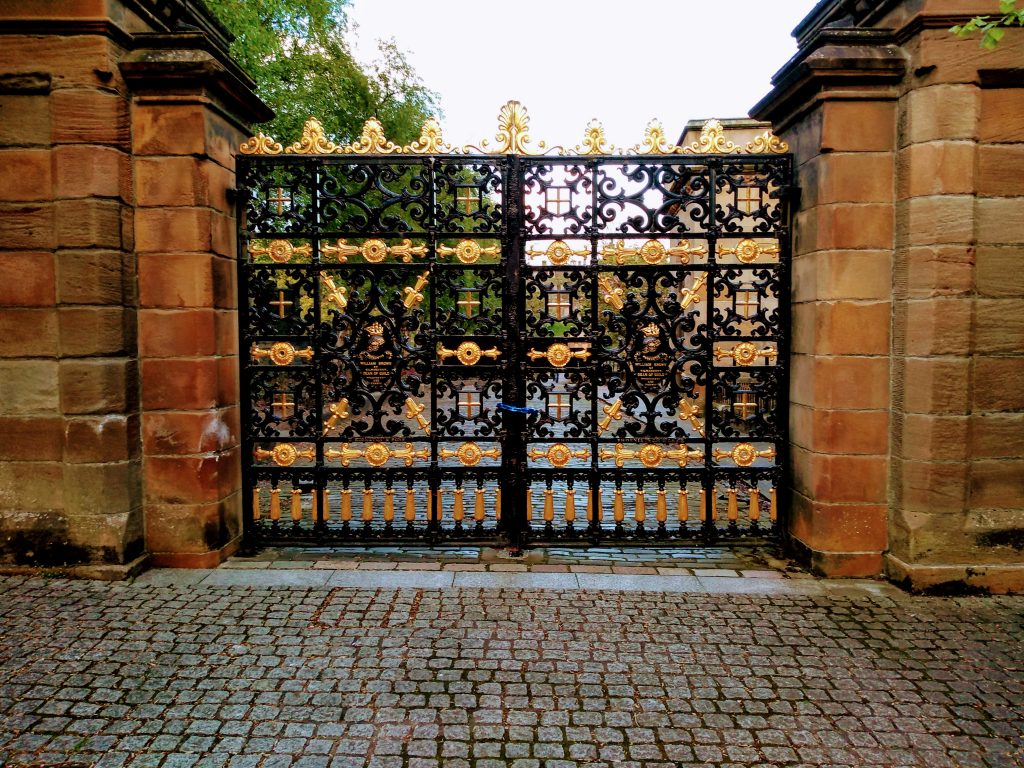

Walking Tour of Glasgow Necropolis
Assemble with other delegates at 4.30pm to walk down to Glasgow Necropolis for a guided tour by the Friends of Glasgow Necropolis. The tour will last one-hour. Please be advised that the Glasgow Necropolis can be uneven underfoot in places, so good walking shoes are strongly recommended (and all tours are undertaken at your own risk).
The Glasgow Necropolis is a Victorian cemetery in Glasgow’s city centre, adjacent to Glasgow Cathedral, and is the resting place for 50,000 individuals, including some prominent people in Glasgow’s history. As the second-largest greenspace in the centre of Glasgow, it provides a diversity of habitats for wildlife and is designated as a Site of Importance for Nature Conservation (SINC).
The Friends of Glasgow Necropolis are a registered charity that supports conservation of and education about this important heritage site.
Wednesday, 24 June 2026
9:00-9:30 Registration & Coffee
George Moore Building
Café
9:30-11:00 Lightning Talks
Govan Mbeki Building
Deeprose Lecture Theatre (A005)
11:15-12:30 Reverse Viva
Govan Mbeki Building
(A303A)

Enhancing Android application security through source code vulnerability mitigation using artificial intelligence: a privacy-preserved, community-driven, federated-learning-based approach
with Dr Janaka Senanayake, Robert Gordon University
Student examiners:
Gengyi Wang, Edinburgh Napier University
Clara Seyfried, University of Dundee
Jess McGowan, University of St Andrews
Govan Mbeki Building
(A303B)

Enabling Distributed Collaborative Design Decision in Software Development Teams
with Dr Mahum Adil, University of Glasgow
Student examiners:
James Nurdin, University of Glasgow
Jingjing Guo, University of Glasgow
Henrike Beyer, University of Dundee
Govan Mbeki Building
(A412)

Performance Analysis of Cellular and Ad-Hoc Sensor Networks: Theory and Applications
with Dr Heba Shoukry, Heriot-Watt University
Student examiners:
Yangheran Piao, University of Edinburgh
Gyakari Ntim, Glasgow Caledonian University
Antonius Bima Murti Wijaya, University of Glasgow
Govan Mbeki Building
(A427)
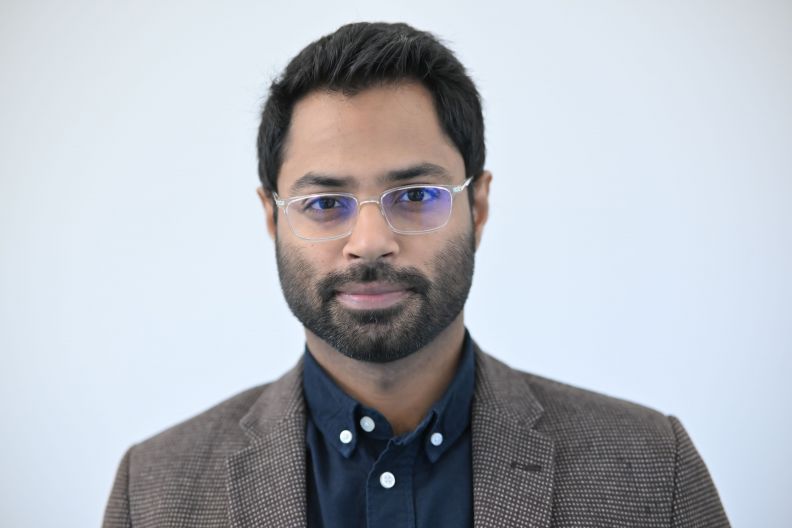
Machine Learning Based User Quality of Experience Optimization in Emerging Cellular Networks
with Dr Sanaullah Manzoor, Glasgow Caledonian University
Student examiners:
Barkavi Sundararajan, University of Aberdeen
Fatihu Aminu, Edinburgh Napier University
Maha Al Balushi, University of Glasgow
12:30-13:30 Lunch & Learning & Teaching Scholars Posters
George Moore Building
Restaurant
L&T Scholars Posters
An interactive poster session, where SICSA’s Learning & Teaching Scholars will present their education and scholarship projects. A range of themes will be covered, including accessibility and the use of Generative AI in computer science education.
13:30-14:30 Black Mirror Challenge Part II
Govan Mbeki Building
Deeprose Lecture Theatre (A005)
Session 2: Research for the Common Good
with Jim Paterson, Glasgow Caledonian University
Inspired by the TV series Black Mirror, this activity explores how technologies designed to improve society can also produce unexpected social, ethical, and political consequences once deployed in the real world. The term “black mirror” refers to the dark reflective surface of a screen, symbolising technology reflecting humanity — including its ambitions, biases, and unintended impacts — back at itself.
In this challenge, your group is a research team that has developed a breakthrough computing technology intended to benefit society.
You will present the technology twice, first at The Launch Pitch: The optimistic version presented at the time of release. Then in The Retrospective Story: A critical retrospective set 5 years later examining what actually happened after deployment.
The challenge is to explore the gap between intentions and outcomes, innovation and responsibility, and technical success and societal impact.
In Part 2 groups will create their Retrospective. The goal is not simply to create a dystopia but groups should aim to show realistic trade-offs,
mixed consequences, unintended effects, complexity and nuance.
Particularly compelling submissions will be considered for prizes at the Conference Dinner.
14:45-15:45 Who Decides the Common Good? Competing Visions for Responsible Computing
Govan Mbeki Building
Deeprose Lecture Theatre (A005)
As computing technologies increasingly shape public life, the idea of “Computer Science for the Common Good” raises difficult questions about who benefits from innovation, who bears its risks, and who gets to define what “good” means in practice. This panel brings together speakers from contrasting backgrounds to explore tensions between technological progress, commercial incentives, public interest, and social responsibility.
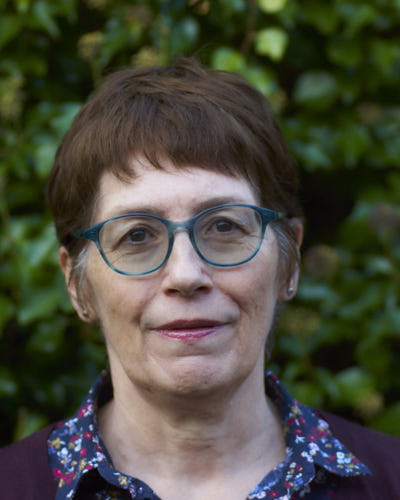
School of Computing Science, University of Glasgow

Founding Director and CEO, Scottish Tech Army

School of Computing Science, University of Glasgow

Director at Digital Skills Education
15:45-16:00 Closing Session
Govan Mbeki Building
Deeprose Lecture Theatre (A005)
Closing remarks
with Anand Philip, Glasgow Caledonian University and Tim Storer, SICSA Director.
16:00-17:00 Coffee & Networking
George Moore Building
Restaurant
18:00-20:00 Conference Dinner & Awards
Annie Lennox Building
Main room (W011)
Celebrate with us
Join us for our Conference Dinner and Awards ceremony where we’ll celebrate our Supervisor of the Year, Best Dissertation, Outstanding poster presentations and more!